
⚖️ Wool Slippers vs Cotton Slippers: A Procurement Guide
📊 The Business Calculation
When building a profitable homewear collection, choosing the right material for your indoor footwear line is the most critical decision you will make. For product developers, importers, and brand owners, the debate of wool slippers vs cotton slippers is not just about which fabric feels better—it is a complex business calculation involving FOB costs, target retail prices, seasonal sales cycles, and brand positioning.
🎯 Strategic Retail Implications
As a B2B buyer, your choice between these two staple materials will dictate your factory selection, your quality control (QC) procedures, and ultimately, your profit margins. Will you target the high-end winter gifting market with premium wool, or will you aim for high-volume, year-round sales with breathable cotton? This comprehensive procurement guide will break down the technical specifications, manufacturing differences, and strategic retail implications of both materials to help you make data-driven sourcing decisions.
🧶 A Brief Introduction to Wool and Cotton Slippers
Before diving into the technical comparison, buyers must establish a clear definition of each product type to ensure accurate communication with overseas suppliers during the Request for Quotation (RFQ) stage.
🐑 What Are Wool Slippers?
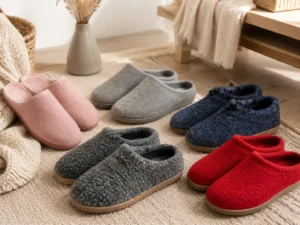
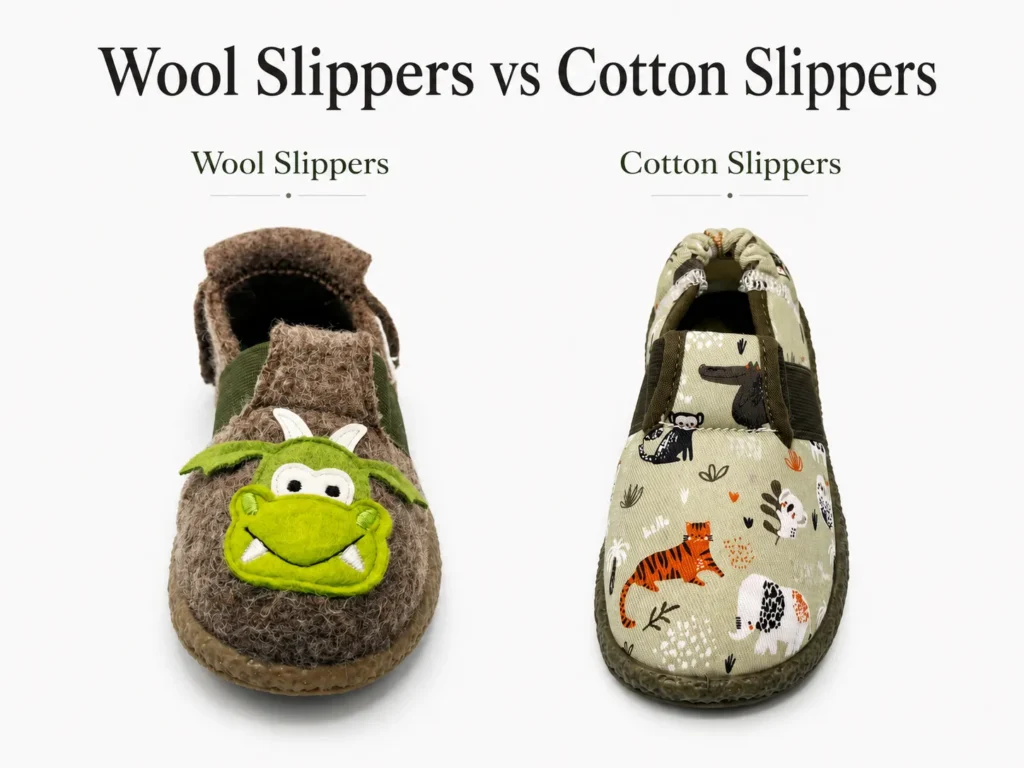
Wool slippers are premium indoor footwear designed primarily for thermal regulation. The upper is constructed from natural animal fleece (such as Australian Merino) or engineered wool blends (typically combining wool with polyester or acrylic). Through knitting, weaving, or felting processes, the wool fibers form a dense, structured material that traps dead air to provide exceptional insulation.
🔗 For a deeper technical breakdown of the materials and manufacturing methods used in this category, buyers should read our foundational guide on Yün terlikler nedir? to understand exact specifications before drafting a tech pack.
🌿 What Are Cotton Slippers?
Cotton slippers are lightweight, highly breathable indoor footwear made from natural plant fibers. In bulk manufacturing, the upper is typically constructed from knitted cotton jersey, cotton terry cloth, woven waffle cotton, or canvas. Because cotton fibers do not possess the same natural crimp and loft as wool, these slippers are usually laminated with a layer of sponge or PU foam to give the upper shape and softness. They are the undisputed champions of transitional seasons, offering a clean, washable, and skin-friendly homewear solution.
🎯 Their Strategic Roles in Homewear Collections
In a mature retail product matrix, these two items do not cannibalize each other; they serve completely different strategic roles.
🔥 The Role of Wool
Acts as the high-margin “hero product” during Q4 (October through December). It drives revenue through higher average order values (AOV) and is positioned as a luxury gift item. You can explore typical winter lineups on our Wool Slippers Collection Page.
☀️ The Role of Cotton
Acts as the volume-driving “cash cow” for Q1 through Q3. It ensures steady cash flow during warmer months and appeals to budget-conscious shoppers looking for everyday utility. See examples of high-volume designs on our Cotton Slippers Product Page.
⚖️ Wool Slippers vs Cotton Slippers: 8 Key Differences Compared
To help procurement teams quickly evaluate which material suits their next purchase order, we have summarized the eight critical dimensions of comparison in the table below.
📊 Alıcılar için Malzeme Karşılaştırma Tablosu
📅 1. Best Seasonality and Usage
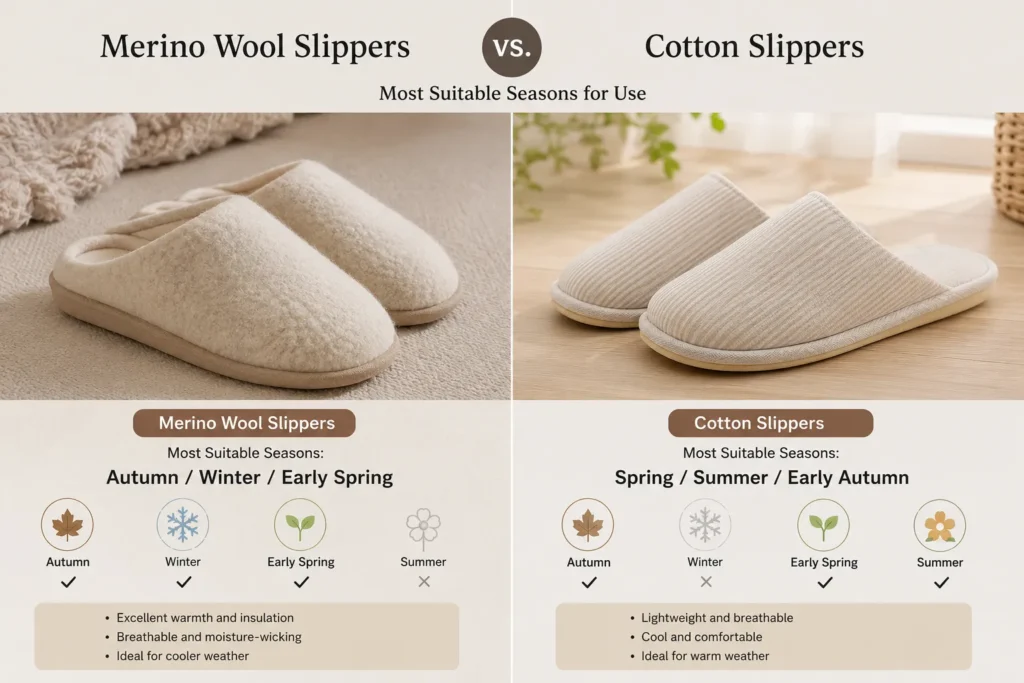
Wool Slippers: The demand for wool footwear is highly cyclical. Wholesale orders must be placed between May and July to ensure ocean freight delivery by late September. They are strictly designed for cold weather usage, making them ideal for markets in Northern Europe, Canada, and the Northern United States.
Cotton Slippers: Cotton offers year-round utility, particularly in climate-controlled environments or warmer geographical regions (like the Southern US or Southeast Asia). Buyers can schedule smaller, more frequent production runs throughout the year without worrying about massive seasonal dead stock.
🔥 2. Warmth and Thermal Insulation
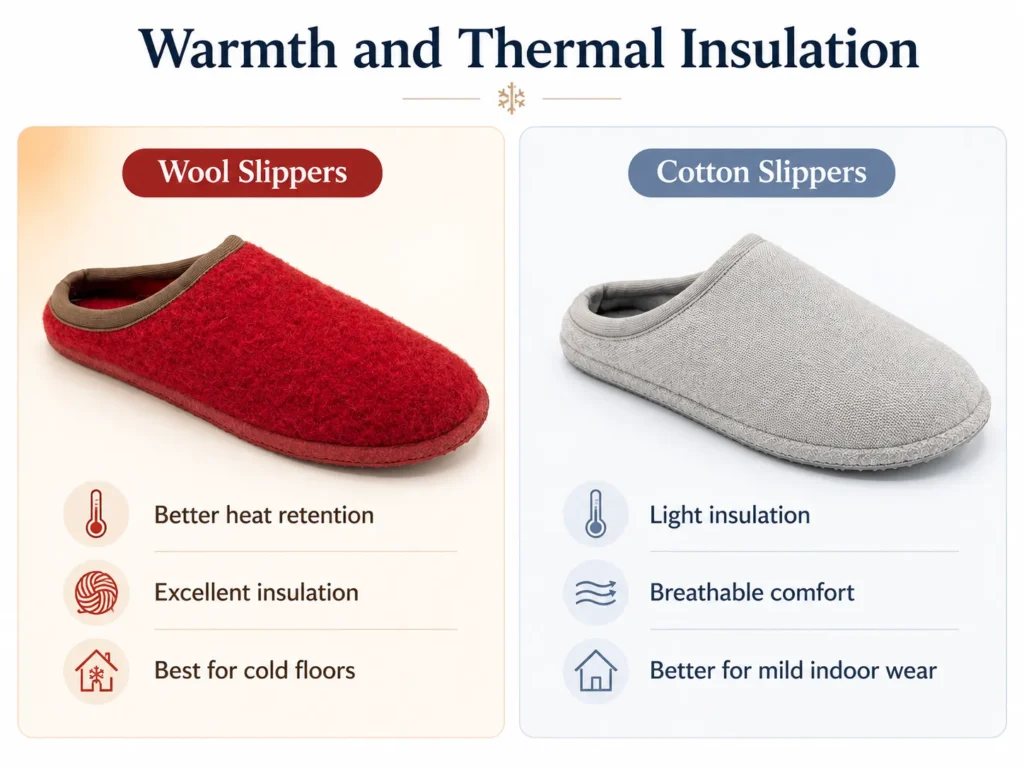
Wool Slippers: Wool is an active fiber. Its natural three-dimensional crimp creates microscopic pockets that trap still air—the best natural insulator available. For buyers, this means you do not need excessively thick linings to achieve high warmth ratings.
Cotton Slippers: Cotton is inherently a cooling fiber. It allows air to pass through easily. While factories can increase the warmth of a cotton slipper by adding a thick polyester fleece lining, the cotton upper itself will not trap heat.
🛡️ 3. Durability and Lifespan
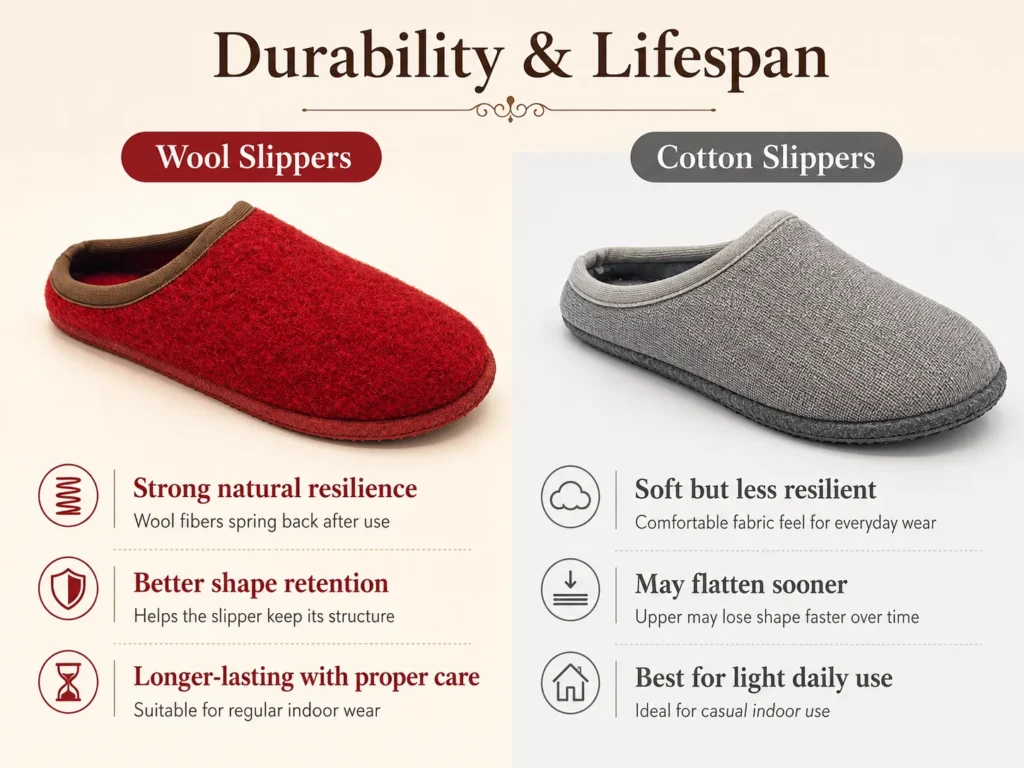
Wool Slippers: High-quality wool slippers, particularly those made from compressed wool felt, have incredible structural integrity. They resist tearing and maintain their 3D shape for years. However, natural wool is susceptible to pilling if subjected to high friction.
Cotton Slippers: Cotton fibers are strong, but the fabric structures used in slippers (like knitted jersey) can stretch out over time. Furthermore, the longevity of a cotton slipper heavily depends on the internal foam lamination. If cheap foam is used, the upper will collapse and look “deflated” after a few months of wear.
🌬️ 4. Breathability and Moisture-Wicking
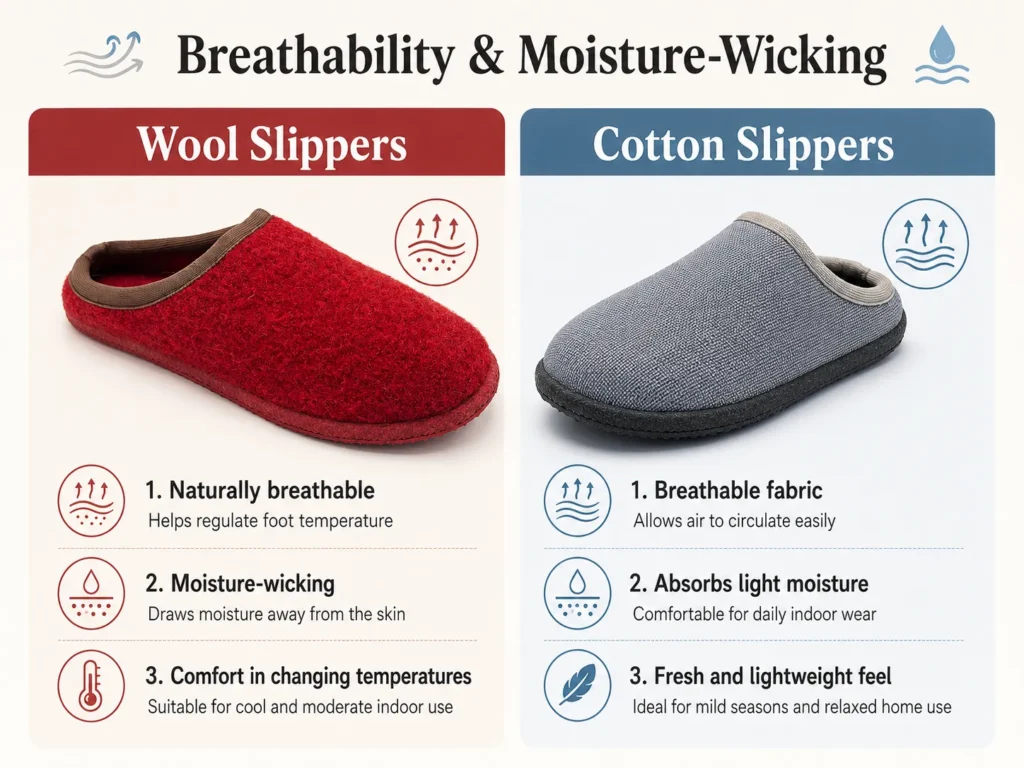
Wool Slippers: Wool slippers are often chosen for winter collections not only because they feel warm, but also because wool can manage moisture well in cold indoor conditions. According to the International Wool Textile Organisation (IWTO), wool can absorb up to 35% of its own weight in moisture vapour before feeling wet. For brand buyers, this explains why wool slippers can support a premium winter comfort story.
Cotton Slippers: Cotton slippers, on the other hand, are still strong for lightweight daily indoor wear, especially in spring, summer, and warm indoor markets. While cotton is highly hydrophilic (it absorbs sweat easily), it does not release moisture into the air as quickly as wool. Therefore, a fully enclosed cotton slipper might feel damp if worn barefoot for extended periods.
☁️ 5. Tactile Experience and Comfort
Wool Slippers: Wool delivers a rich, substantial hand-feel. When a consumer touches a wool slipper on a retail shelf, the density communicates luxury. However, pure wool can feel slightly coarse to sensitive skin, which is why B2B buyers often specify a softer faux-fur lining for the interior.
🏭 Fabrika Deneyimi: Yün Kalınlığının Elle ve Ölçümle Kontrol Edilmesinin Nedenleri
I still remember one winter wool slipper order in 2023. The product photos looked good, but during our sample checking, we measured the wool-blend upper at around 420–450 GSM (Grams per Square Meter), while the buyer expected a fuller premium feel closer to 550 GSM. The client was worried that the slipper would look soft in photos but feel thin in hand after retail delivery. Internally, we compared the hand feel, folding recovery, and upper thickness before cutting bulk material.
Finally, we suggested upgrading to a denser wool-blend upper for the main style and keeping the lighter material only for a lower-price promotional SKU. For buyers, the lesson is simple: when choosing wool slippers, do not confirm material only by photos — always check GSM, thickness, hand feel, and recovery with a physical sample.
Cotton Slippers: Cotton offers an immediately familiar, t-shirt-like softness. It is hypoallergenic and creates zero friction against bare feet. The comfort of a cotton slipper is heavily reliant on the sponge density placed beneath the fabric.
🧼 6. Washing and Maintenance Difficulty
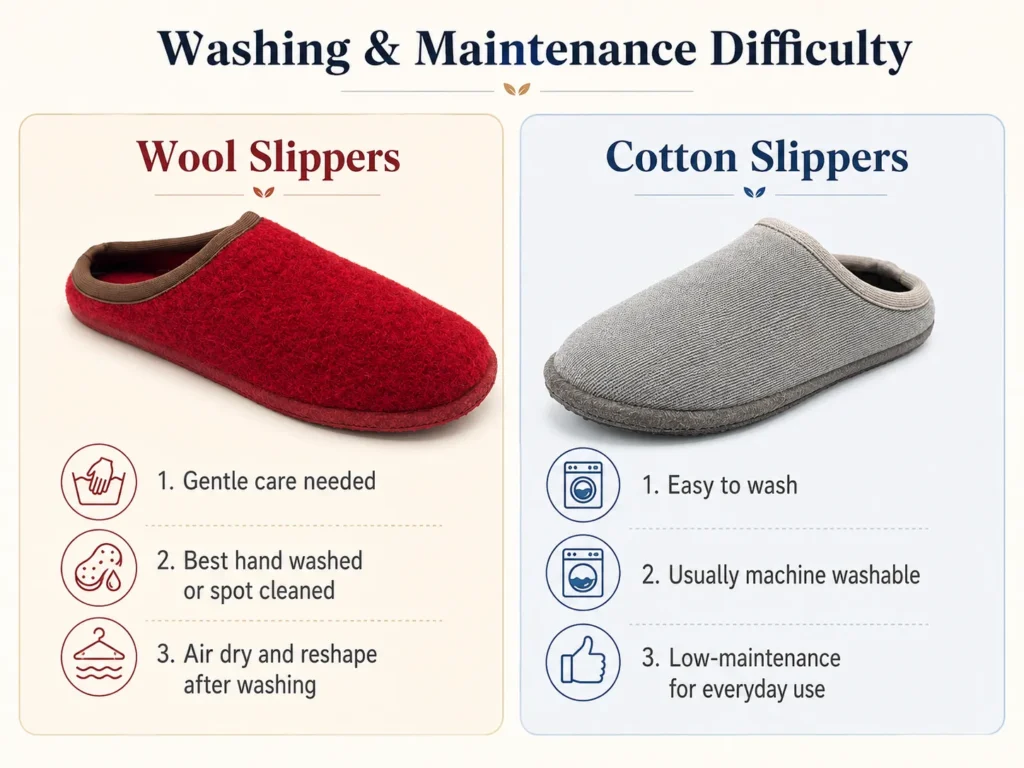
Wool Slippers: This is a major friction point for consumers. Natural wool is prone to felting and shrinking if agitated in hot water. B2B buyers must instruct their factories to sew clear care labels indicating “Hand Wash Only” or “Dry Clean,” unless the wool has been specifically treated (superwash wool), which drastically increases the FOB cost.
Cotton Slippers: Cotton shines in ease of maintenance. Most cotton slippers can be thrown directly into a domestic washing machine. This makes them highly appealing to families, pet owners, and hospitality buyers who require strict hygiene standards.
💰 7. Cost Structure and Manufacturing Price
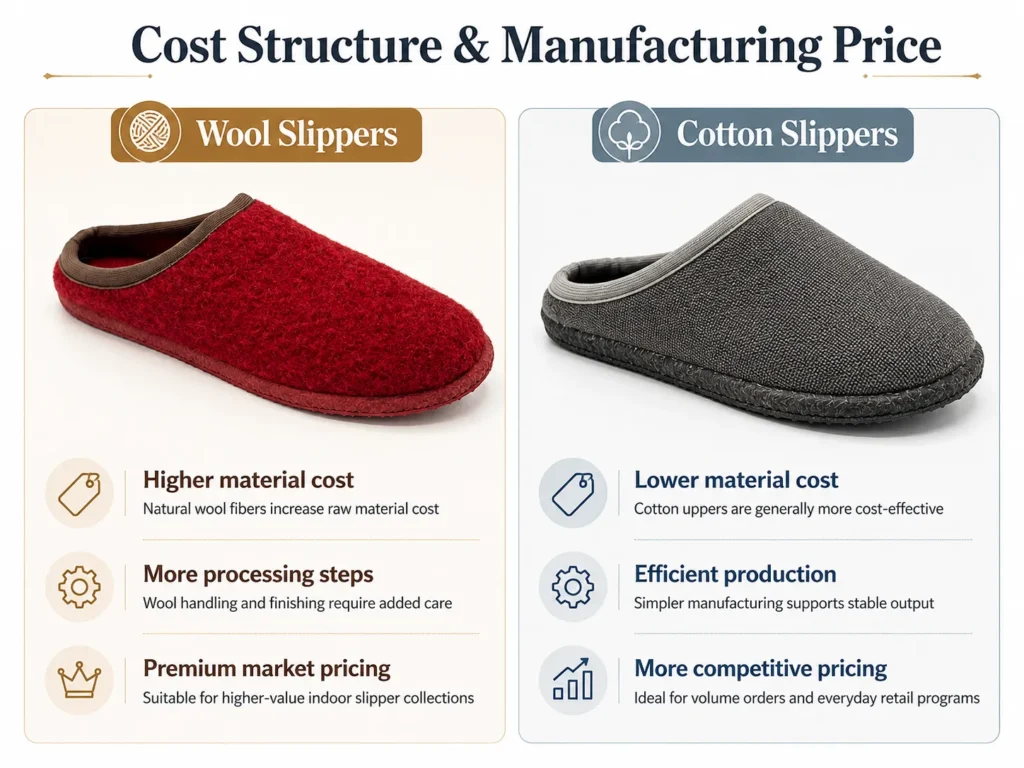
Wool Slippers: The raw material cost of wool is significantly higher than cotton. Furthermore, working with thick wool felt requires heavy-duty die-cutting machines and specialized stitching needles, which slows down the assembly line. Buyers should expect the FOB price of a genuine wool slipper to be 200% to 400% higher than a basic cotton slipper.
Cotton Slippers: Cotton fabric is universally abundant and cheap. Because the fabric is soft and thin, factories can cut multiple layers simultaneously, drastically increasing production speed. This results in a very low FOB price, allowing buyers to achieve massive scale and volume.
📈 8. Market Demand and Consumer Trends
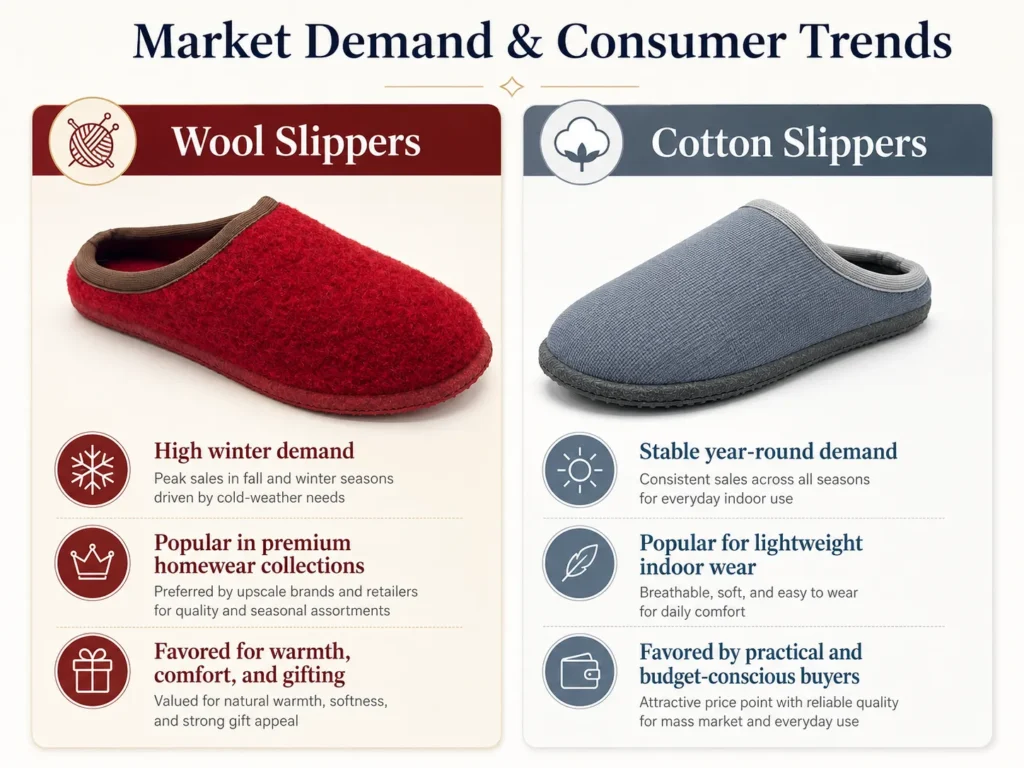
Wool Slippers: Demand spikes around major holidays. Consumers search for “best gifts for dad” or “luxury homewear.” The trend is moving toward sustainable, ethically sourced wool (like mulesing-free Merino).
Cotton Slippers: Demand is steady and driven by utility. Consumers search for “washable house shoes” or “summer indoor slippers.” The trend here favors minimalist designs, waffle textures, and spa-like aesthetics.
🎯 How Do These Differences Impact Your Sourcing Decisions?
Understanding the physical differences is only half the battle. B2B buyers must translate these material properties into actionable business strategies.
🏷️ Impact on Brand Positioning
The material you choose directly dictates how consumers perceive your brand.
🏭 Industry Case: Allbirds and Material Storytelling
A useful footwear industry example is Allbirds. The brand built strong recognition around simple design and natural-material storytelling, especially with its Merino wool footwear. The lesson for slipper buyers is not that every brand must use Merino wool, but that material choice can become part of the product story. Wool slippers are easier to position as warm, premium, winter-ready, and giftable. Cotton slippers are easier to position as lightweight, breathable, practical, and everyday.
For B2B buyers, the material should match the brand story, target price, sales season, and channel — not just the unit cost.
🔥 Wool Slippers:
Elevates your brand. Positions you as a purveyor of quality, comfort, and luxury.
🌿 Cotton Slippers:
Positions your brand as accessible, practical, family-friendly, and value-driven.
💰 Impact on Retail Price and Profit Margins
📈 Wool Slippers:
While the factory cost is higher, the retail markup potential is massive. A well-designed wool slipper that costs $15-20 to manufacture might retail for $65–$95, depending on the brand. The perceived value supports a healthy gross margin.
📊 Cotton Slippers:
These are volume players. A cotton slipper might cost $8-14 to manufacture and retail for $55–$65. The per-unit margin is smaller, but the high inventory turnover rate drives overall profitability.
📅 Impact on Target Sales Seasons
❄️ Wool Slippers:
Your capital will be tied up in Q2/Q3 as you manufacture for the Q4 holiday spike. If you over-order wool slippers, carrying that inventory through the summer will hurt cash flow.
☀️ Cotton Slippers:
Offers year-round sales velocity. You can place smaller, more frequent wholesale orders to maintain steady inventory levels without heavy seasonal risk.
⭐ Impact on Customer Reviews and Return Risks
⚠️ Wool Slippers:
The biggest return risk is sizing (thick wool linings can make shoes feel tight initially) and improper washing (customers shrinking them). Action: Add clear sizing disclaimers and bold care labels.
⚠️ Cotton Slippers:
The biggest return risk is premature wear and tear, or the memory foam flattening out too quickly. Action: Specify higher-density EVA or PU foam in your tech pack to ensure the cotton slipper remains comfortable for at least 6-12 months.
🧩 Impact on Product Line Planning
A smart sourcing manager uses both. You might launch a “Premium Alpine Collection” featuring 100% wool slippers for December, and a “Breeze Home Collection” featuring open-toe waffle-knit cotton slippers for May. This ensures your factory lines keep running and your shipping containers remain full year-round.
🤝 How Different B2B Buyers Should Choose
Not every buyer has the same business model. Here is how you should decide based on your specific retail channel.
🏨 Premium Brands and Hospitality Buyers
✨ The Choice: Wool Slippers (or High-GSM Organic Cotton).
The Strategy: High-end boutique brands and luxury hotels must protect their prestige. Cheap, thin materials will damage the brand. Focus on 100% Merino wool or premium wool-blends. For hotels, custom embroidery on a structured wool-felt upper provides the ultimate VIP guest experience.
🛒 E-commerce and Amazon Sellers
📦 The Choice: Both, but heavily engineered for logistics.
The Strategy: E-commerce is driven by shipping weights, dimensions, and star ratings. Cotton slippers are lighter and cheaper to ship, making them great for aggressive PPC campaigns. Wool slippers offer higher margins to absorb Amazon FBA fees. For either choice, specify ultra-lightweight EVA soles to keep the package weight under 300 grams, and ensure the uppers can withstand vacuum sealing to reduce shipping volume.
🏬 Mass Market Supermarkets
🏷️ The Choice: Cotton Slippers and Synthetic Blends.
The Strategy: Supermarkets rely on impulse buys and high foot traffic. The retail price must remain under $20. Sourcing managers should focus on high-volume OEM cotton slippers with bright, seasonal prints. Use TPR soles so the slippers look substantial on the hanging rack.
🏪 Retail Chain Stores
🎯 The Choice: A Tiered Strategy.
The Strategy: Retail chains should offer “Good, Better, Best” categories. Cotton terry slippers serve as the entry-level “Good” product. A 50/50 wool-poly blend serves as the “Better” option. A 100% pure wool slipper serves as the high-margin “Best” option. This captures all demographics walking through the door.
📋 Key Specifications to Confirm Before Placing a Bulk Order
Whether you choose wool or cotton, your Purchase Order cannot simply say “make 5,000 slippers.” You must lock in strict B2B manufacturing specifications to protect your investment. Here is how to write your spec sheet.
🧵 Upper Material Composition
What it means: The exact percentage of fibers in the fabric.
How to specify it:
- For Wool: Do not write “Wool.” Write “70% Polyester / 30% Sheep Wool.”
- For Cotton: Write “100% Ring-Spun Cotton Jersey” or “80% Cotton / 20% Poly Waffle Knit.”
✅ Alıcı Eylemi: Demand a fabric composition lab test report from the supplier before mass production begins.
📏 Fabric Thickness and GSM
What it means: Grams per Square Meter. It determines how thick, heavy, and premium the upper feels.
How to specify it:
- For Wool Felt: Specify 500-600 GSM for a structured, premium feel.
- For Cotton: Specify 250-300 GSM to ensure the fabric doesn’t tear easily.
🏭 Factory Execution: The factory must weigh the raw fabric rolls upon arrival. If the fabric is underweight, they must reject the roll before cutting.
☁️ Lining and Insole Construction
What it means: What the foot actually rests on inside the shoe.
How to specify it: Specify the foam layers layer by layer. Example: “Top layer: 2mm faux fur lining. Middle layer: 8mm High-Density Memory Foam (density 45D). Bottom layer: 3mm EVA heel cushion.”
✅ Alıcı Eylemi: Cut open the Pre-Production (PP) sample with scissors to physically verify the factory used the correct density foam, rather than cheap, low-rebound sponge.
🥾 Outsole Materials and Usage Scenarios
What it means: The bottom of the shoe, dictating safety and indoor/outdoor capability.
📋 Endüstri Standardı Referansı: Ayakkabı Kayma Performansı için ASTM F2913
Whether the upper is wool or cotton, the outsole still needs to match the wearing environment. For indoor slippers used on wood, tile, laminate, or hotel flooring, anti-slip performance should not be judged only by touching the sole pattern. As defined by ASTM F2913, footwear slip performance can be evaluated by measuring the dynamic coefficient of friction between footwear and flooring under controlled conditions.
For buyers, this means the RFQ should not only say “anti-slip sole.” It should also clarify whether the slipper is for home, hotel, children’s use, or short indoor-outdoor walking.
How to specify it:
Write: “Outsole: Injected TPR, thickness 12mm, Shore A Hardness 55, must pass ASTM F2913 dry/wet slip test.”
🦶 Size Ranges and Internal Length Standards
What it means: How the shoe fits different global markets.
How to specify it: Slippers are notoriously tricky because the plush lining takes up internal space.
✅ Alıcı Eylemi: Provide a strict “Internal Cavity Length” chart in millimeters. Do not just say “Size US 9.” State: “Size US 9 Men: Internal footbed length must be exactly 270mm.”
🔗 For more details on navigating sizes and quality control across borders, check our comprehensive slipper quality control guide.
🏷️ Custom Logos, Packaging, and Care Labels
What it means: How your brand is presented to the consumer.
How to specify it:
- Logo: “High-density embroidery on the upper, exact Pantone 295C.”
- Care Label: Must be legally compliant. For cotton: “Machine wash cold, tumble dry low.” For wool: “Hand wash only, dry flat.”
- Packaging: “Individual PE zip-lock bag with desiccant silica gel pack inside to prevent mold during ocean freight.”
🔬 Sample Confirmation and Wash Testing
Step-by-Step Action Plan for Buyers:
- Receive the physical PP (Pre-Production) sample from the factory.
- Check the GSM and material hand-feel against your original requirements.
- Perform a “wear test” for 3 days to check for foam flattening or uncomfortable stitching.
- Conduct a wash test (referencing ISO 6330) to check for sole delamination, color bleeding, or fabric shrinkage.
- Only sign off and seal the sample once it passes all tests. This sealed sample becomes the legal standard for your bulk order inspection.
🏆 Sonuç
The choice between wool slippers vs cotton slippers is not a simple matter of preference; it is a strategic business decision that shapes your supply chain, marketing story, and financial outcomes.
🔥 Wool Slippers
Wool slippers offer high margins, premium positioning, and unmatched winter thermal performance, making them essential for high-end retail and Q4 revenue spikes.
🌿 Cotton Slippers
Cotton slippers provide vital cash-flow consistency, exceptional breathability, and volume-driven profitability for year-round sales.
💡 Strategic Takeaway & Next Steps
By understanding the technical nuances—from checking GSM thickness to utilizing ISO wash standards and ASTM slip testing—B2B buyers can confidently negotiate with factories, draft bulletproof Purchase Orders, and build footwear collections that minimize returns and maximize customer satisfaction.
Evaluate your brand’s target demographic, align your material choices accordingly, and ensure your factory partners execute your specifications flawlessly.
❓ FAQ About Wool Slippers vs Cotton Slippers
1. Are wool slippers warmer than cotton slippers?
Yes, significantly. Natural wool fibers feature microscopic crimps that trap dead air, providing exceptional thermal insulation. Cotton is breathable and lightweight, making it better suited to keep off mild drafts rather than providing heavy winter warmth.
2. Do cotton slippers make your feet sweat less than wool?
Not necessarily. While cotton is highly air-permeable, wool has superior moisture-wicking properties. Wool can absorb up to 35% of its weight in moisture without feeling wet, actively pulling sweat away from the foot. Cotton absorbs sweat but dries slower, which can leave feet feeling damp.
3. Which material is cheaper to manufacture for bulk wholesale orders?
Cotton slippers are generally much cheaper to manufacture. The raw material cost of cotton is lower, and the fabric is easier and faster to cut and sew on standard factory lines. Wool, especially premium Merino or dense wool felt, requires more expensive raw materials and specialized handling.
4. Can I machine wash wool slippers?
Generally, no. Unless specifically treated and labeled as “machine washable,” hot water and machine agitation will cause wool fibers to felt, shrink, and ruin the slipper’s shape. Cotton slippers, conversely, are typically safe for standard machine washing.
5. What is the best sole material for both wool and cotton slippers?
For strictly indoor use on hardwood floors, a soft suede or lightweight EVA sole is ideal because it won’t scratch floors. If you expect consumers to walk outside (e.g., to the mailbox), a TPR (Thermoplastic Rubber) sole is required for durability and grip, and should ideally be tested against ASTM F2913 standards.
6. Why does GSM matter when ordering custom cotton slippers or wool slippers?
GSM (Grams per Square Meter) measures the density and thickness of the fabric. If you do not specify a high enough GSM in your tech pack, the factory might use a cheaper, thinner fabric, resulting in a flimsy slipper that feels cheap to the consumer and wears out quickly.
7. How should an Amazon seller choose between the two?
Amazon sellers should consider shipping weights and seasonal demand. Cotton slippers are lighter, reducing FBA and freight costs, and sell consistently year-round. Wool slippers have a higher manufacturing cost but command a higher retail price, making them highly profitable during the Q4 winter holiday rush.
8. Do wool and cotton slippers require different inner linings?
Usually, yes. Wool slippers often feature matching wool or faux-fur linings to maximize the winter warmth aesthetic. Cotton slippers typically use breathable cotton terry or light synthetic mesh linings to maintain a cool, spring/summer feel.
9. Can I customize the dye colors for both materials?
Yes, B2B factories offer extensive OEM customization. Both cotton and wool can be dyed to match specific Pantone brand colors. However, keep in mind that custom dyeing usually requires a higher Minimum Order Quantity (MOQ) compared to using factory stock colors.
10. How do I ensure my bulk order matches the sample I approved?
To prevent issues like color differences or poor bonding, you must sign and date a Pre-Production (PP) sample. Before the factory ships the bulk order, hire a third-party QC inspector to check the bulk goods against this sealed sample, focusing on GSM, inner length, and sole adhesion.