
💡 Introduction: What Are Wool Slippers?
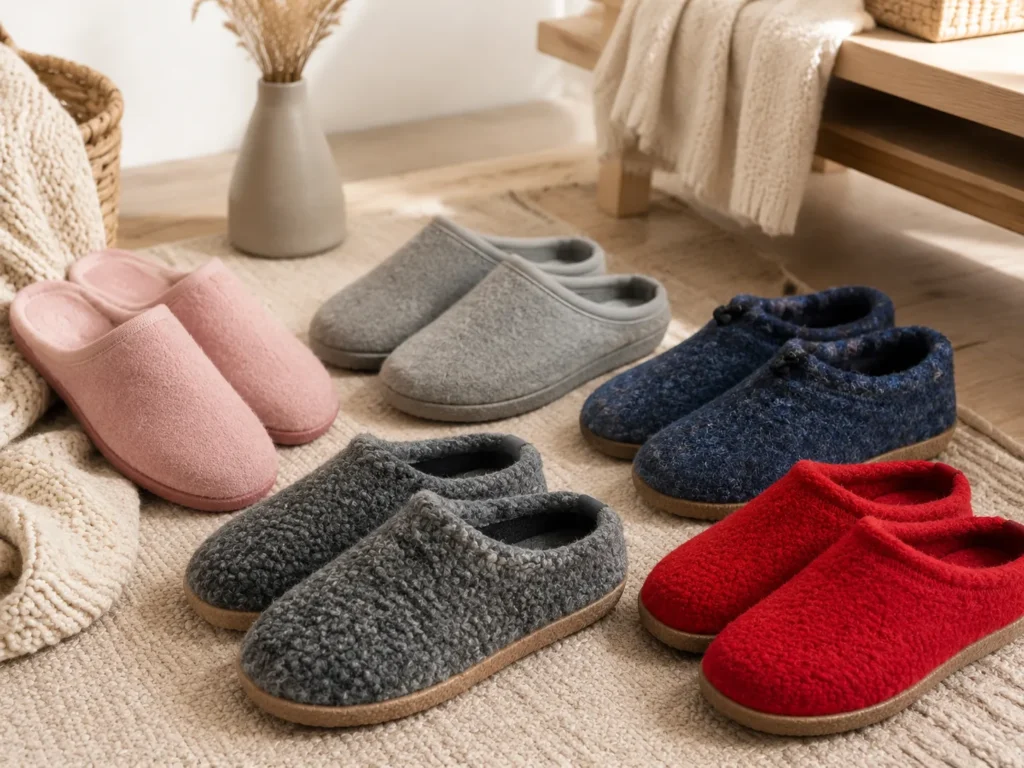
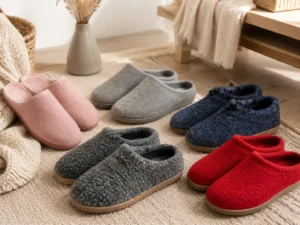
When sourcing premium indoor footwear for retail, hospitality, or e-commerce, the first question many product developers and buyers ask is: what are wool slippers, and why are they commanding such a high market share in the winter homewear segment? In short, wool slippers are specialized indoor footwear crafted from natural wool fibers or engineered wool blends, designed to offer superior thermal regulation, moisture-wicking properties, and unmatched comfort.
⚠️ Strategic Insights for Buyers
For B2B buyers, fabric sourcing managers, and brand owners, understanding the technical specifications behind these products is not just about aesthetics—it is about margin, durability, and brand reputation. Whether you are developing a luxury private label collection or placing a bulk wholesale order, this comprehensive guide will walk you through exactly what are wool slippers made of, how to select the right materials, and how to avoid costly pitfalls during bulk production.
📊 Quick Reference: Market Value & Material Specs
⚡ Quick Answer: Wool Slipper Specs at a Glance
For buyers who need immediate technical details for their tech packs or Request for Quotation (RFQ) documents, here is a quick answer table summarizing standard wool slipper specifications:
🎯 The Definition and Core Purxpose of Wool Slippers
Before diving into factory specifications, it is crucial to align the product with the end-user’s actual needs.
📖 Basic Definition of Wool Slippers
At a fundamental level, wool slippers are indoor shoes constructed primarily from sheared animal fleece (usually sheep). The fibers are either woven, knitted, or compressed (felted) to form the structural upper of the shoe. Unlike flat cotton fabrics or fully synthetic plastics, the crimped structure of natural wool creates millions of microscopic air pockets. This structural reality provides the core value proposition of the product: trapping body heat while simultaneously allowing humidity and sweat to escape.
🌍 Common Uses of Wool Slippers
Understanding where your end consumer will wear the product dictates how you should draft your PO (Purchase Order) and spec sheet.
🏠 Home Environments

The vast majority of wholesale wool slippers are destined for residential use. Consumers wear them on cold hardwood, tile, or laminate floors. For this environment, buyers should prioritize high-density memory foam insoles and silent, non-scratching outsoles (like suede or soft EVA).
🏨 High-End Hotels / Vacation Rentals

Luxury resorts and boutique Airbnbs frequently source custom wool slippers to elevate guest experiences. Unlike disposable terry-cloth slippers, wool variants communicate high value. For hotel sourcing, durability and universal sizing (unisex patterns) are critical, alongside a prominent but elegant embroidered hotel logo.
💼 Office Lunch Breaks

With the rise of hybrid work models, “office slippers” have become a trending micro-niche. Professionals keep them under their desks for comfort. These require a more structured, shoe-like appearance, often demanding a closed-heel design and a TPR sole so the wearer can briefly step out into the hallway or breakroom.
✈️ Long-Distance Travel / Flight Cabins

Travelers need ultra-lightweight, highly compressible footwear. For flight cabin slippers, buyers should specify thin, flexible EVA soles and unlined knitted wool uppers that can be easily flattened and packed into a carry-on pouch without losing their shape.
📊 Quick Reference: Market Uses & Specs Summary
🧵 What Materials Are Used in Wool Slippers?
Brief Explanation: The bill of materials (BOM) is the heartbeat of your slipper. The choices you make here directly dictate your FOB price, your retail margin, and the longevity of the product.
🧶 What Materials Are Typically Used for the Upper?
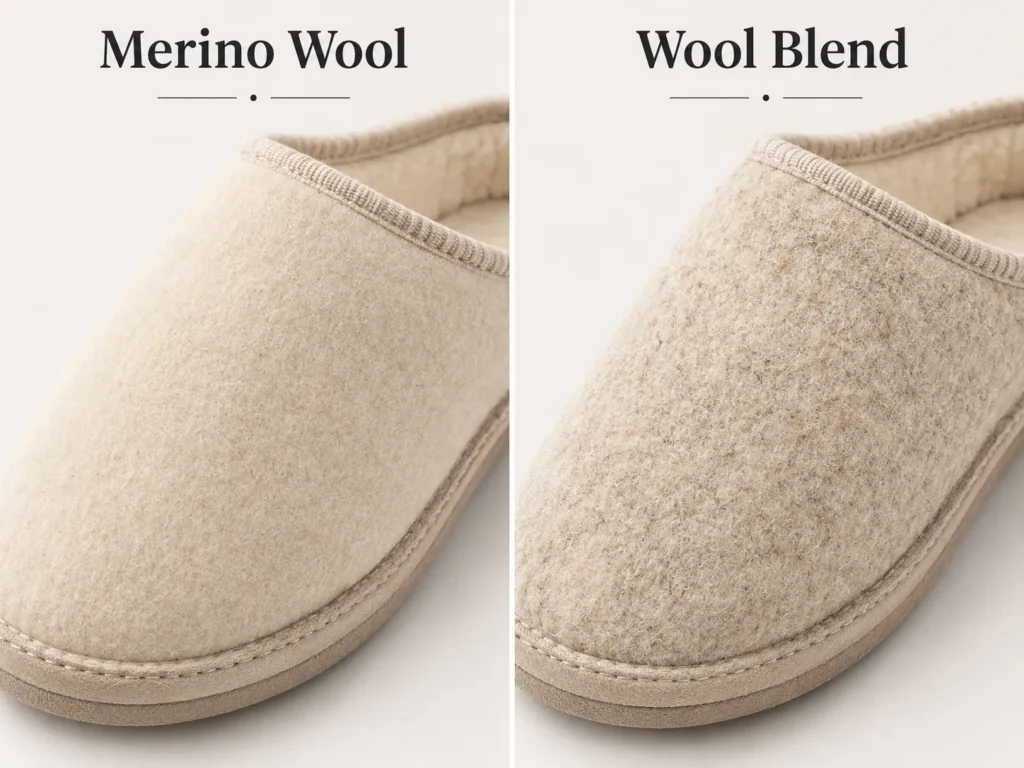
Merino Wool
Sourced primarily from Merino sheep, this is the gold standard for luxury slippers. It features an incredibly fine micron count (often below 24 microns), making it exceptionally soft and non-itchy against bare skin. Buyers targeting high-end, premium retail markets should specify 100% Merino wool. However, buyers must be aware that pure Merino requires careful washing and has a higher raw material cost.
Wool Blends
For mass-market and mid-tier retail, wool blend slippers are the most strategic choice. Factories typically blend natural wool with synthetic fibers like polyester or acrylic (e.g., a 30% wool / 70% poly ratio). This reduces the cost significantly while maintaining the “wool look.” Blends are also more resistant to abrasion and hold their shape better after machine washing.
🏭 Factory Experience: Why Wool Thickness Should Be Checked by Hand and Measurement
With 8 years of factory experience in wool slipper production, we have learned that buyers should not judge wool material only by photos. In our sampling room, we always check the upper by hand feel, thickness, surface density, and flexibility, because two wool slippers can look similar on screen but feel completely different when worn indoors. For instance, a client once approved a digital photo of a felt upper, but upon touching the physical sample, realized the GSM (grams per square meter) was too low, making the slipper feel flimsy. We internally adjusted the spec from 400 GSM to 600 GSM. The lesson for buyers: always request physical material swatches and specify the exact weight and thickness in your tech pack before bulk cutting begins.
🥾 What Materials Are Typically Used for the Sole?
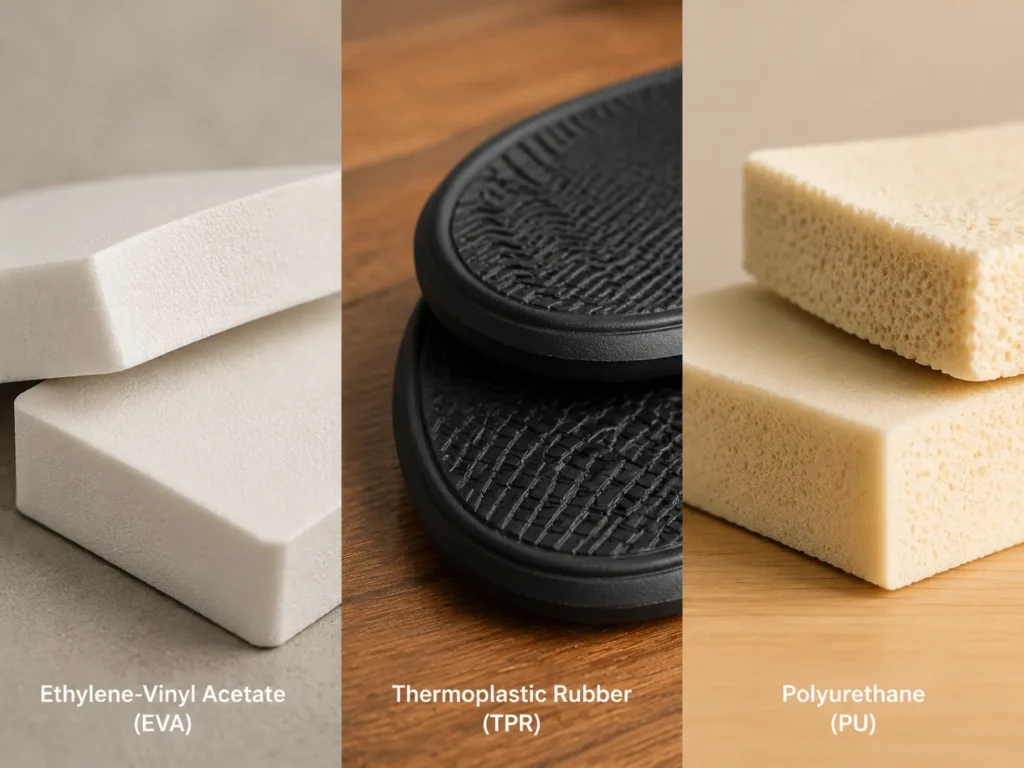
EVA (Ethylene-Vinyl Acetate)
Ethylene-Vinyl Acetate (EVA) is a highly compressible, foam-like material. It is ultra-lightweight, water-resistant, and cost-effective. It is excellent for keeping shipping weights low, though it can compress over months of heavy use.
TPR (Thermoplastic Rubber)
Thermoplastic Rubber (TPR) offers superior grip and durability. It feels heavier and more substantial than EVA. If your brand positioning suggests “indoor/outdoor versatility” (meaning the user can walk to the mailbox in them), TPR is the mandatory choice.
📋 Industry Standard Reference: ASTM F2913 for Footwear Slip Performance
For wool slippers with EVA, TPR, PU, rubber, or other outsole materials, anti-slip performance should not be judged only by touching the sole pattern. ASTM F2913 provides a laboratory method for measuring the dynamic coefficient of friction between footwear and flooring, so it can be used as a reference when buyers need more objective slip-performance evaluation for indoor slipper soles. Including this standard in your RFQ ensures your factory formulates the rubber compound correctly for residential tile or wood floors.
PU (Polyurethane)
Polyurethane (PU) soles are injected directly or cemented onto the upper. They offer a great balance between the lightweight nature of EVA and the durability of rubber. PU is often used in orthopedic or ergonomically designed wool slippers due to its excellent shock absorption.
📊 Quick Summary: Materials BOM Breakdown
🌟 Key Features of Wool Slippers
When marketing types of wool slippers to your B2B clients or end consumers, you must emphasize these four core technical features.
🔥 Warm and Comfortable for Cold Seasons
Wool’s thermal retention is unmatched. Because the fibers naturally crimp, they trap dead air—one of the best insulators on earth. This means the slippers provide immediate warmth the second the user slides their foot in, without relying on external heat sources.
☁️ Soft Touch for Daily Homewear
Unlike rigid leather or stiff synthetics, wool conforms gently to the shape of the foot. Whether knitted or felted, the upper material provides a frictionless, soft-touch environment that prevents blisters and promotes relaxation after a long day in hard work boots or heels.
🌬️ Breathable and Moisture-Friendly
This is the ultimate differentiator. Synthetic fleece slippers will make feet sweat profusely. Natural wool can absorb up to 30% of its own weight in vapor without feeling wet.
📋 Industry Standard Reference: AATCC Test Method 15 for Colorfastness to Perspiration
Because wool is highly breathable and interacts with foot moisture, buyers must ensure the dyes used do not bleed onto the wearer’s socks or skin. As defined by AATCC Test Method 15, textiles are subjected to simulated perspiration to evaluate colorfastness. When sourcing dark-colored wool linings, requiring your supplier to pass this standard guarantees that your premium product won’t leave embarrassing dye stains on your customer’s feet.
🪶 Lightweight and Easy to Wear
A heavy slipper causes foot fatigue. By combining a lightweight wool upper with an EVA or lightweight TPR sole, factories can produce a shoe that weighs less than 250 grams per pair. The slip-on nature of most designs means zero bending or tying is required.
👟 Common Types of Wool Slippers
🩴 Open-Back Wool Slippers / Scuffs
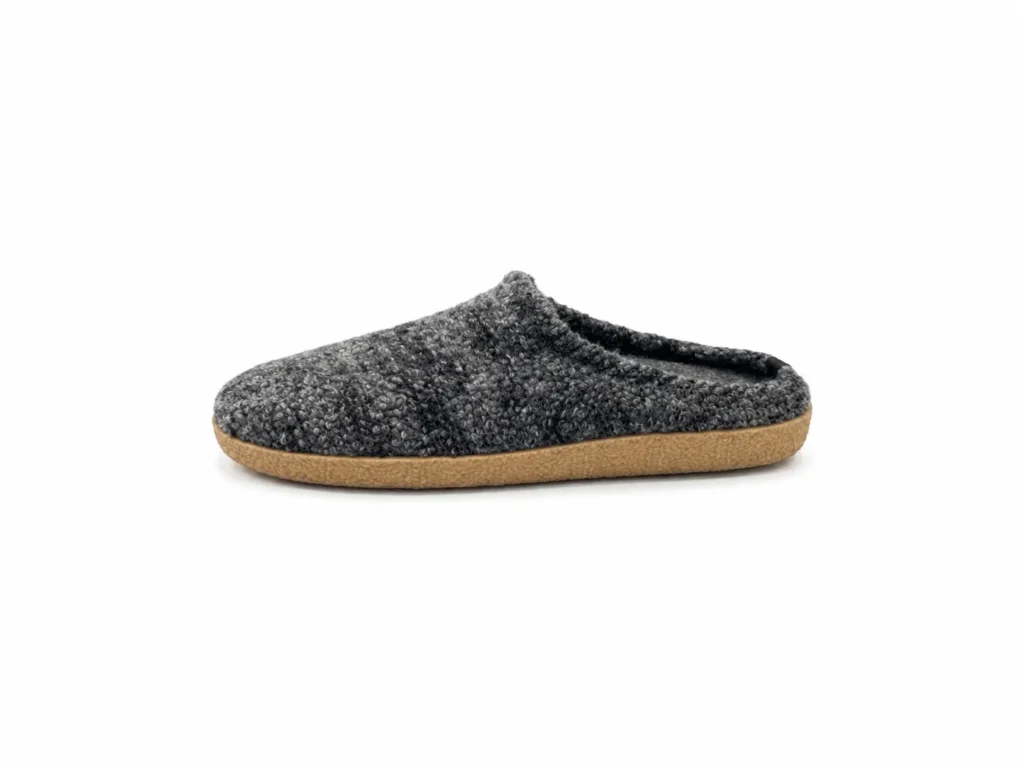
Characterized by an open heel, these “scuffs” are the most popular silhouette for casual homewear. They are exceptionally easy to manufacture, requiring fewer stitching operations, which keeps the wholesale price highly competitive. They are ideal for quick slipping on and off.
👞 Full-Heel Wool Indoor Shoes
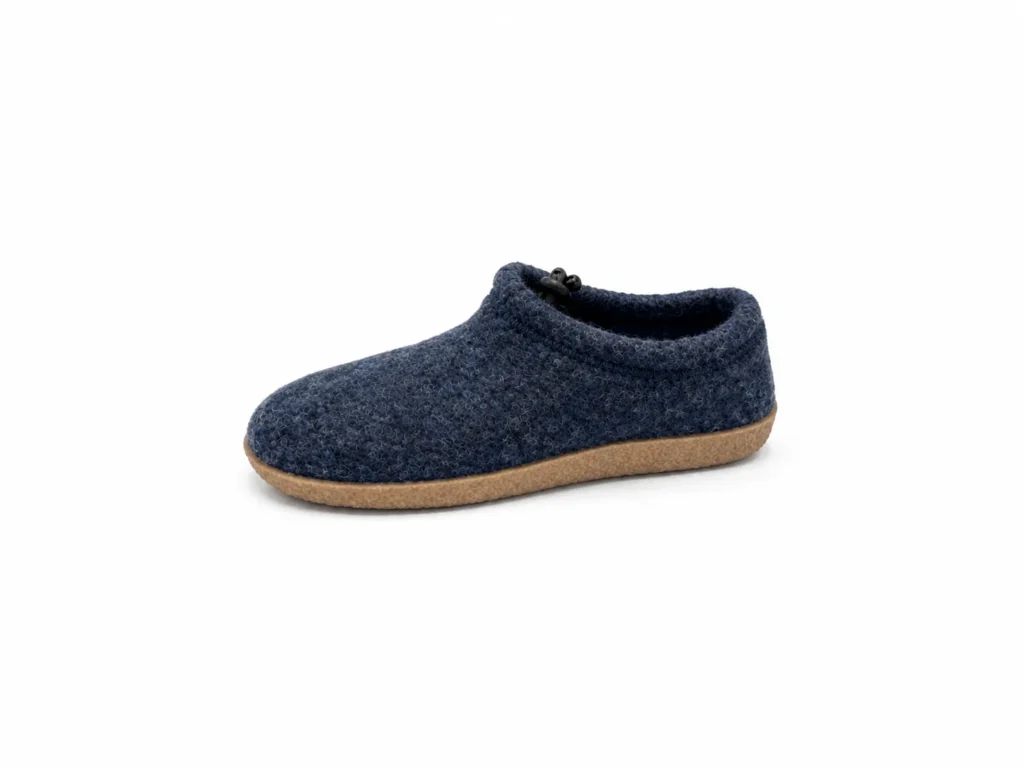
These enclose the entire foot, often featuring an elastic or structured heel cup. They require more material and precise pattern making, slightly increasing the cost. However, they provide maximum warmth and stability, making them perfect for elderly consumers or colder climates.
🧸 Wool Slippers for Kids
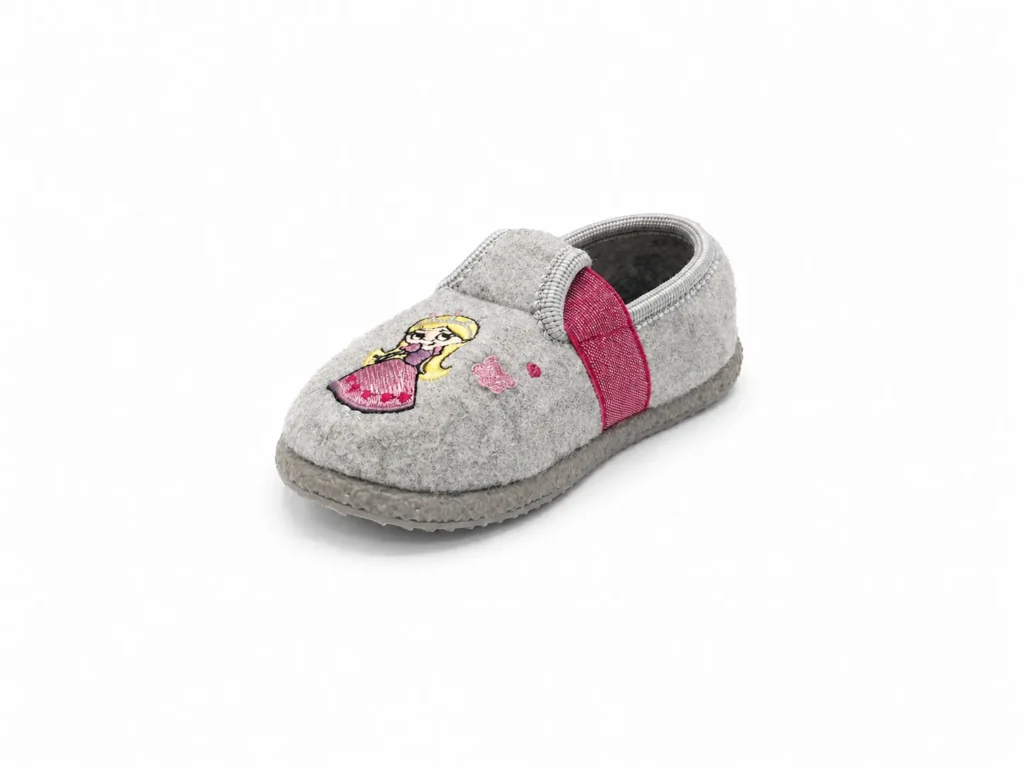
Safety and vibrant aesthetics drive this category. Kids’ slippers must prioritize non-toxic dyes and aggressive anti-slip sole patterns to prevent falls on slippery floors. Elastic ankle straps are often added to keep the slipper secure on active toddlers.
🔗 Explore our comprehensive Kids’ Wool Slippers Product Page for detailed safety specs and colorful design options.
👩💼 Wool Slippers for Adults
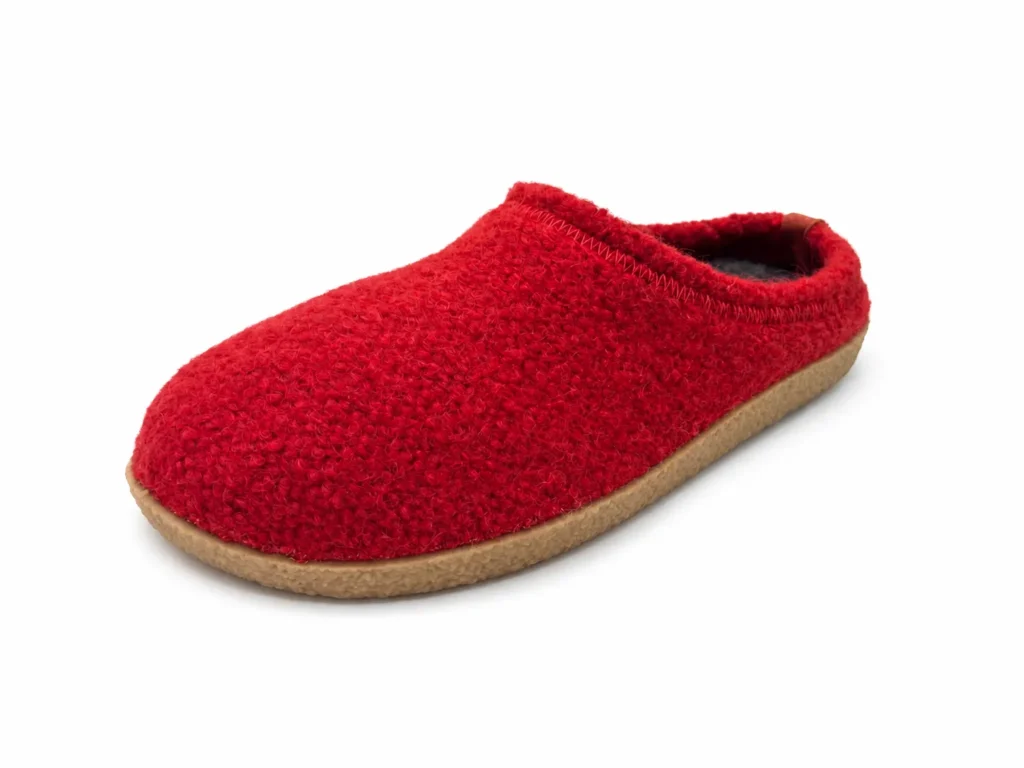
Adult lines lean toward neutral, sophisticated Pantone palettes (charcoals, oatmeals, and navies). The focus shifts entirely to ergonomic arch support, high-density memory foam, and premium material storytelling (e.g., highlighting Merino sourcing).
🔗 View our Adults’ Wool Slippers Collection Page for classic silhouettes and premium B2B wholesale options.
⚖️ Wool Slippers vs. Other Indoor Slipper Materials
How do wholesale wool slippers stack up against alternative materials? Buyers need this data to justify the higher retail price point of wool to their merchandising teams.
📊 Material Comparison Table for Buyers
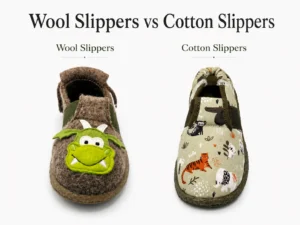
🌿 Wool vs. Cotton Slippers
- Wool: Provides robust winter insulation, superior structural integrity (especially wool felt), and excellent moisture management.
- Cotton: Highly breathable but lacks serious thermal insulation. Cotton is flatter, less plush, and generally better suited for warm climates or transitional seasons.
💡 For a deeper dive into adjusting your seasonal purchasing strategy, read our full Wool vs. Cotton Slippers analysis.
🧸 Wool vs. Plush Slippers
- Wool: Offers natural temperature regulation. It feels substantial and retains its premium look even after months of wear.
- Plush (Synthetic Fleece/Sherpa): Feels incredibly soft on the retail shelf but degrades rapidly. The synthetic fibers mat together after washing, and the lack of breathability often leads to odor issues.
💡 Learn why premium brands are pivoting away from plastics in our Wool vs. Plush Slippers breakdown.
🛠️ How to Choose Wool Slippers for Wholesale or Private Label Orders
Sourcing effectively means translating marketing desires into strict factory specifications. Here is how B2B buyers should navigate the procurement process.
🧶 Choose the Right Wool Material
As discussed, decide between pure wool, felt, or blends. In your RFQ, clearly state the required wool percentage (e.g., “70% Polyester / 30% Wool”) and the required fabric weight (GSM). Do not leave this up to the factory’s interpretation.
🥾 Check the Sole Type
Match the sole to your buyer persona. Specify the exact material (TPR vs. EVA), the required sole thickness (e.g., 12mm), and the tread pattern depth to ensure proper traction.
📏 Confirm Size Range and Fit
Sizing discrepancies cause massive e-commerce returns. Ensure the factory provides clear millimeter lengths for the inner sole. Specify whether you are using EU, US, or UK sizing standards, and consider requesting wider lasts (molds) for Western markets.
⚙️ Customization (OEM/ODM) Capabilities
If you are building a brand, custom wool slippers are mandatory. Ensure your supplier can handle:
- Logo Application: Woven labels on the footbed, embroidery on the upper, or debossed logos on the rubber sole.
- Pantone Matching: Dyeing the wool to match your exact brand colors.
- Bespoke Molds (ODM): Creating a brand-new sole mold unique to your company.
🔍 Review Sample Quality Before Bulk Production
Never wire a bulk deposit based on a photo. Request a Pre-Production (PP) sample. Inspect the stitching density (stitches per inch), pull firmly on the glued seams to test bonding strength, and wear them for a few hours to check for hot spots or chafing.
✅ Consider Certifications and Compliance
📋 Industry Standard Reference: OEKO-TEX® STANDARD 100 for Textile Safety
For wool slippers that touch the skin, especially styles for kids, hotels, or premium homewear brands, buyers often ask whether the textile components meet recognized safety requirements. OEKO-TEX® STANDARD 100 is commonly used in the textile industry to show that materials and finished textile products have been tested for harmful substances, which makes it a useful reference when buyers evaluate wool uppers, linings, labels, and other textile parts. Specifying this in your PO protects your brand from liability.
💡 For a complete roadmap on supplier selection, visit our guide on How to Source Wool Slippers from China.
🚨 Common Quality Issues in Bulk Slipper Orders
Quality control (QC) is where profit margins are either saved or destroyed.
🧶 Uneven Wool Thickness
If a factory uses poorly blended rolls of material, one slipper might feel plush while its pair feels thin.
✅ Buyer Action: Specify a strict GSM tolerance (+/- 5%) in your QC checklist.
🎨 Color Difference Between Sample and Bulk
🏭 Factory Case: How We Solved a Sample-to-Bulk Color Difference Issue
In one private label wool slipper project, the client approved a warm light-grey sample for a winter homewear collection. However, during the first bulk material inspection, our QC team found that the new wool-blend upper looked slightly warmer in tone than the approved sample, especially under yellow indoor lighting. The difference was not dramatic, but for a lifestyle brand selling matching robes and slippers as a gift set, even a small shade change could affect the final retail presentation.
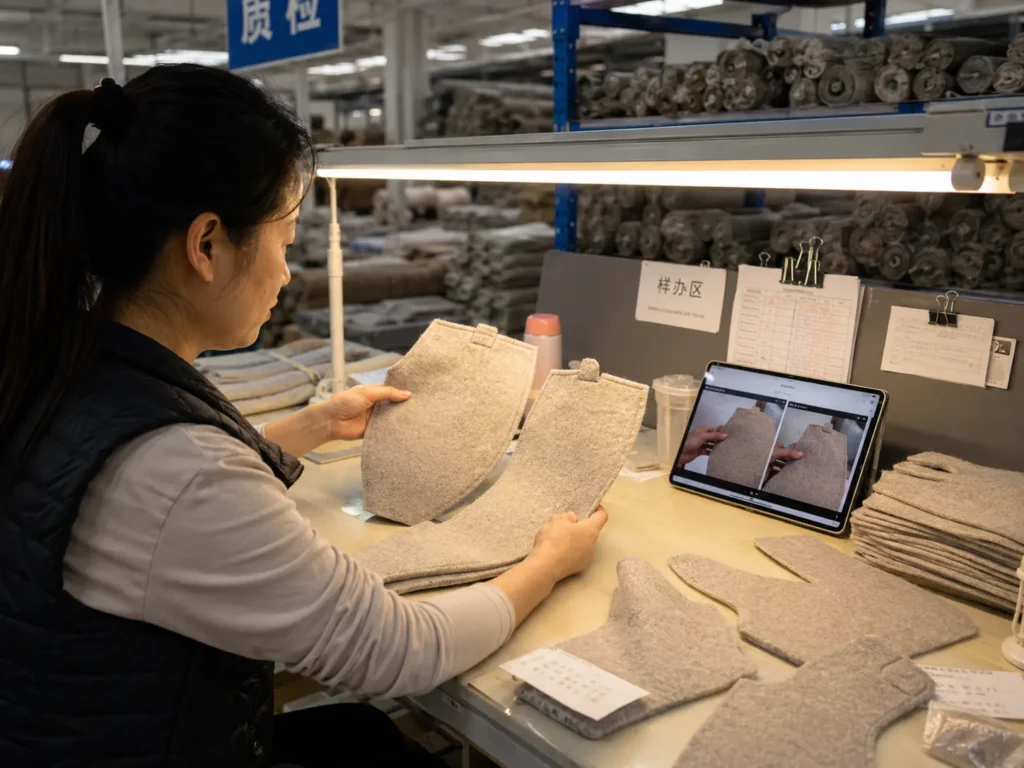
Instead of moving directly into full production, we stopped the cutting process and separated the material rolls by dye lot. Then we compared the bulk fabric against the approved sample under three conditions: daylight, warehouse lighting, and warm indoor lighting. After sharing comparison photos and short videos with the client, we suggested two solutions: either accept a controlled shade band for the full order, or remake the most visible upper panels using the closest-matching wool-blend batch.
The client chose the second option for the top panels and accepted the original batch for less visible inner parts. Internally, we also updated our bulk material approval process: for wool slippers in light colors, we now confirm shade under multiple lighting conditions before cutting. This helped the client keep the premium look of the collection while avoiding unnecessary delay and waste.
🥾 Sole Detachment or Weak Bonding
🛠️ Factory Experience: Preventing Sole Delamination in Bulk Production
We once encountered an issue on the assembly line where the EVA soles were slowly peeling away from the wool-blend uppers during the aging test. We discovered that the wool fibers were too oily, preventing the standard water-based PU glue from adhering properly. From this factory experience, we learned that the upper margin must be properly roughened (buffed) and a specialized primer must be applied before gluing. Buyers should always ask their third-party QC inspectors to perform a strict “sole pulling test” (peel strength test) using a digital force gauge before authorizing shipment.
📏 Size Inconsistency
If the factory’s cutting dies become dull, or if workers stretch the fabric unevenly over the shoe last, sizes will vary.
✅ Buyer Action: Conduct an AQL (Acceptable Quality Limit) inspection focusing strictly on inner-length measurements across different cartons.
📦 Labeling and Packaging Errors
Incorrect barcodes or missing warning labels will cause your goods to be rejected by Amazon FBA or major retail warehouses.
✅ Buyer Action: Require photos of the packed master carton and individual retail box before the container is loaded.
💡 For more actionable advice, read our article on avoiding pitfalls in Wool Slipper order procurement.
🏭 Wool Slippers Manufacturing Process
Knowing how the factory builds your product helps you negotiate better prices and spot manufacturing blunders.
🧵 1. Material Selection
The process starts in the raw materials warehouse. Giant rolls of wool fabric, memory foam, and lining materials are inspected for defects, colorfastness, and GSM consistency before being released to the cutting floor.
📐 2. Pattern Making and Sampling
CAD software is used to design the 2D shapes that will wrap around the 3D shoe last. Prototyping occurs here. For buyers, this is the stage where you finalize your tech pack and approve the Pre-Production sample.
✂️ 3. Cutting and Stitching
Hydraulic press machines use steel cutting dies to punch out thousands of upper panels. Skilled operators then stitch the lining, memory foam, and wool upper together. Edge binding is applied to ensure the seams do not fray or irritate the wearer’s foot.
🥾 4. Sole Attachment
The stitched upper is slipped tightly over a foot-shaped mold (the last). Glue is applied to the bottom of the upper and the top of the outsole. The pieces pass through a heating tunnel to activate the adhesive, and a high-pressure machine presses them firmly together. For higher-end models, a heavy-duty side-stitch is added to physically sew the upper to the TPR outsole.
🔍 5. Quality Inspection and Packing
Workers trim excess threads, clean off stray glue marks, and insert paper stuffing to maintain the shoe’s shape. The QC team checks sizing and appearance. Finally, they are packed into custom retail boxes, placed in moisture-protective polybags, and loaded into master export cartons.
🔗 For a visual breakdown of the factory floor, visit our page on the Wool Slipper production process.
🏆 Conclusion
💡 The Key to Profitable Sourcing
Understanding exactly what are wool slippers, the materials that construct them, and the common pitfalls in their manufacturing process is the ultimate key to profitable B2B sourcing. By selecting the right wool blends, demanding rigorous quality control standards, and partnering with factories that understand international compliance (like OEKO-TEX and ASTM standards), you can elevate your homewear collection from average to exceptional.
🚀 Start Your Procurement Journey
Whether you are a product developer drafting a new tech pack, or an importer preparing for the winter retail rush, use the specifications and factory insights provided in this guide to protect your margins and deliver unparalleled comfort to your end consumers. Start your procurement journey today by requesting material swatches and establishing strict quality parameters with your trusted manufacturing partners.
❓ FAQ About Wool Slippers
1. What are wool slippers made of?
Wool slippers are primarily constructed using a natural sheep’s wool or wool-blend upper, a plush inner lining, a layer of cushioning memory foam, and a durable outsole typically made of EVA, TPR, or suede.
2. Are wool slippers too hot for indoor use?
No. Natural wool is highly breathable and thermo-regulating. It responds to body temperature, keeping feet warm in the winter while allowing excess heat and moisture to escape, preventing the “overheating” common with synthetic plush slippers.
3. What is the difference between wool blend slippers and pure merino wool slippers?
Pure Merino wool offers the absolute highest level of softness and natural breathability, positioning it for luxury retail. Wool blend slippers mix natural wool with synthetic fibers (like polyester) to increase durability and significantly reduce wholesale costs.
4. Can I customize wool slippers for my brand?
Yes. Most B2B manufacturers offer extensive OEM/ODM customization. You can dictate the exact Pantone color of the wool, add custom embroidered logos, choose specific outsole materials, and design private-label packaging.
5. What is the best sole material for wool slippers?
It depends on the user environment. For strictly indoor use on hardwood floors, soft suede or lightweight EVA is best. If the wearer needs to step outside briefly (indoor/outdoor use), a textured TPR (Thermoplastic Rubber) sole is highly recommended for its grip and durability.
6. How do I evaluate the quality of a wool slipper sample?
Buyers should check the GSM (thickness/density) of the wool upper, perform a pull-test on the sole to ensure the glue bonding is strong, verify the stitching is straight without loose threads, and measure the inner cavity to ensure accurate sizing.
7. Are wool slippers machine washable?
This depends heavily on the construction. Pure wool felt can shrink or lose its shape in a washing machine. However, many wool blend slippers with synthetic linings are designed to be machine washed on a gentle, cold cycle. Always specify care instructions on your custom labels.
8. What is the standard MOQ for wholesale wool slippers?
For factories using stock fabric colors and standard molds, MOQs can be as low as 500 pairs. If you require custom dye lots, bespoke woven patterns, or new ODM sole molds, expect MOQs to range from 1,000 to 2,000 pairs per style.